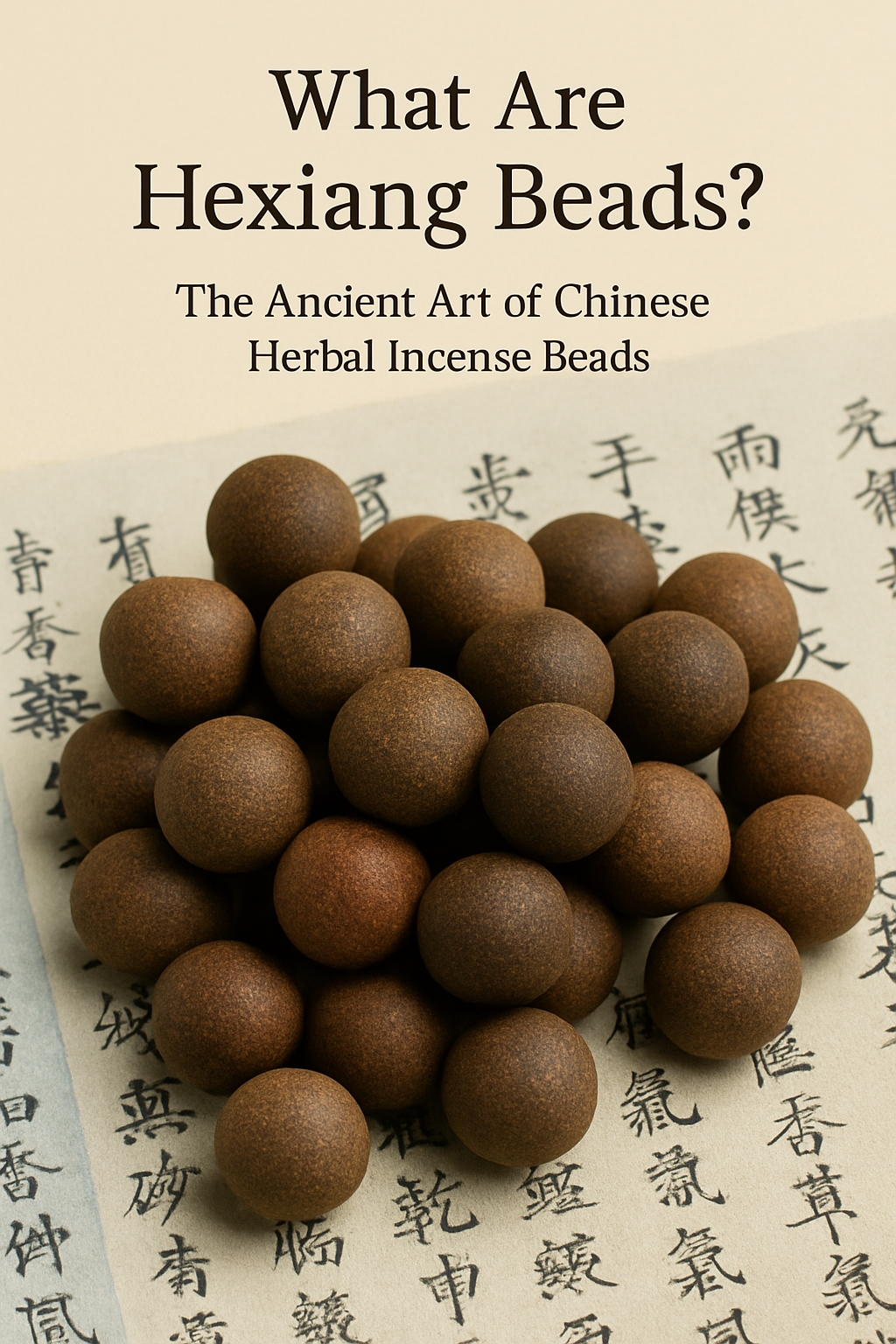
Discover the Timeless Beauty of Hexiang Beads
For over two thousand years, incense has held an important place in Chinese cultural life, ceremonial traditions, and daily customs. Among the many forms of traditional incense, Hexiang Beads (合香珠) represent one of the most refined expressions of blended incense craftsmanship and classical Eastern philosophy.
The Historical Origins of Hexiang Beads — A Legacy from Ancient Dynasties
The term Hexiang (合香) refers to the art of blended incense. This tradition can be traced back to the Han Dynasty (206 BC – 220 AD) and reached its height during the Tang and Song Dynasties. Artisans carefully combined aromatic woods, resins, botanicals, and spices into layered incense compositions, widely used in imperial courts, temples, and private residences.
These blends were valued not for measurable effects, but for their symbolic meanings, ritual use, and cultural refinement within historical contexts.
Common Traditional Ingredients
Historically documented incense materials include:
-
Agarwood
-
Sandalwood
-
Frankincense
-
Ambergris (synthetic)
-
Rose petals
-
Polygonum multiflorum
These materials were selected based on fragrance character, symbolic association, and cultural preference rather than functional or therapeutic claims.
From Incense Powder to Wearable Beads
As incense craftsmanship evolved, blended incense was gradually shaped into solid, portable forms — now known as Hexiang Beads. These beads allowed incense traditions to move beyond static settings and into personal, everyday use.
Today, Hexiang Beads are commonly appreciated as:
-
Aromatic accessories
-
Cultural heritage objects
-
Symbolic personal ornaments
Cultural and Symbolic Meanings of Hexiang Beads
Within traditional cultural contexts, Hexiang Beads are often associated with symbolic ideas such as balance, reflection, and ritual awareness. These interpretations belong to historical and philosophical traditions and are understood as cultural symbolism rather than functional attributes.
Disclaimer: All references to symbolism and tradition are cultural in nature and do not imply medical, therapeutic, or personal effects.
The Contemporary Appreciation of Hexiang Beads
As interest in traditional craftsmanship and cultural heritage grows globally, Hexiang Beads have gained appreciation across regions including Australia, Europe, North America, and Southeast Asia.
Their appeal today often includes:
-
Use of natural and responsibly sourced materials
-
Emphasis on traditional handcrafting techniques
-
Aesthetic fragrance appreciation
-
Connection to historical Chinese culture
Why Hexiang Beads Matter Today
Hexiang Beads are more than decorative objects. They represent centuries of cultural memory, artisanal knowledge, and symbolic expression. In contemporary life, they serve as a bridge between ancient traditions and modern appreciation for craftsmanship, design, and heritage.