What Is Silk?
Silk is a lightweight fabric spun from continuous protein filaments produced by silkworms and has long been regarded as “the queen of fibers.” Its appeal lies in a combination of natural origin, refined texture, and exceptional aesthetic qualities.
Key characteristics include:
🌿 Natural origin – cultivated mulberry silk is valued for its purity and traditional processing
✨ Pearlescent sheen – light refracts through silk fibers to create soft, shifting hues
🌬️ Ultra-smooth handfeel – naturally low friction, allowing the fabric to drape fluidly and softly
🌡️ Thermo-adaptive comfort – helps maintain comfort across seasonal temperature changes
🎨 Excellent dye affinity – readily absorbs color for rich, detailed patterns
Origin of Silk
According to legend, silk was discovered by Empress Leizu around 2700 BCE, when a silkworm cocoon fell into her tea and unraveled into a lustrous filament. Archaeological discoveries at sites such as Hemudu and Shanxi have revealed silk remnants dating back over 5,000 years, supporting China as the birthplace of sericulture.
From the Western Han Dynasty onward, silk traveled along the Silk Road across Eurasia, becoming a symbol of cultural exchange, refinement, and prestige.
How Is Silk Made?
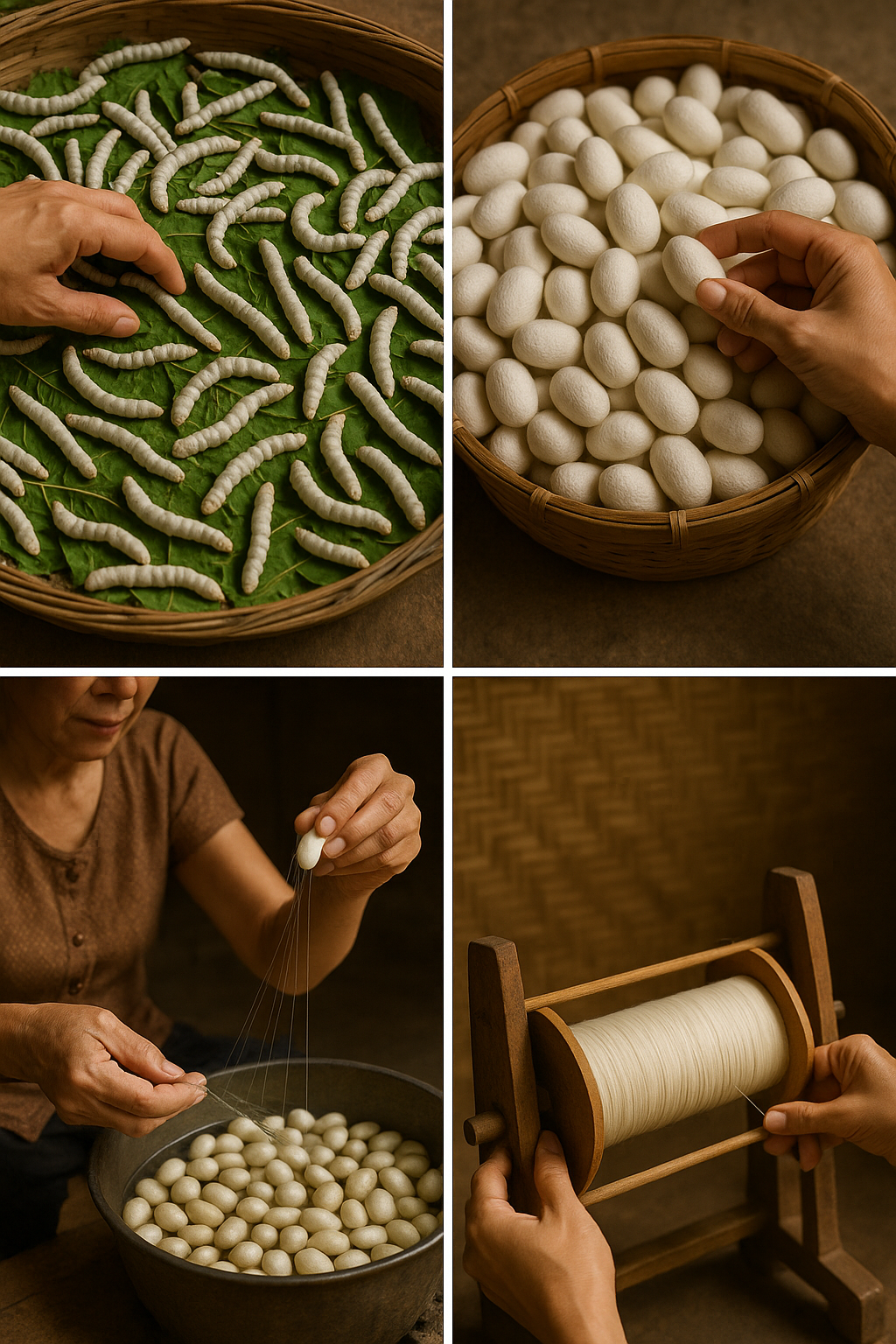
Sericulture – Silkworms are raised and fed exclusively on mulberry leaves.
Cocoon Harvesting – Cocoons are collected after approximately 7–10 days.
Stifling & Cooking – Heat is applied to soften sericin and preserve the filament structure.
Brushing – The cocoon fibers are gently brushed to locate the silk end.
Reeling – Multiple filaments are drawn together in warm water and wound under controlled tension.
Re-reeling – Raw silk is cleaned, graded, and rewound for uniformity.
Weaving – Jacquard or shuttle-less looms transform silk yarn into finished fabric.
Cultural Significance & Modern Uses
👑 Imperial heritage – Historically associated with royalty and high-ranking officials
🪡 Literary inspiration – Frequently featured in classical poetry, painting, and decorative arts
🌏 Global exchange – Central to the Silk Road and cross-cultural interaction
👗 Modern refinement – Used today in haute couture, scarves, sleepwear, pillowcases, and contemporary luxury textiles
Conclusion
A single silk filament carries thousands of years of craftsmanship, cultural memory, and artistic refinement. To touch silk is to encounter a living legacy that bridges ancient tradition and modern elegance.